

Are you looking for playful, engaging stories that also offer rich learning opportunities? Books by Laura Numeroff are a wonderful choice for young learners!
From If You Give a Mouse a Cookie to If You Give a Moose a Muffin and If You Give a Pig a Pancake, her stories follow a fun and predictable circular pattern where one small action leads to another. This structure not only keeps children entertained but also makes these books perfect for teaching key language and thinking skills.
Whether you’re teaching in an ESL classroom, homeschooling, or working in a primary school, these stories are versatile, engaging, and easy to bring to life.


Why Use Laura Numeroff Stories?
Perfect for Sequencing & Retelling
The circular structure helps children understand order, retell events, and predict what comes next.
Great for ESL Learners
Repetition and clear cause-and-effect patterns support comprehension and build confidence in English.
Rich Everyday Vocabulary
Food, actions, routines, and common objects make vocabulary meaningful and easy to apply.
Encourages Creativity & Humor
Children quickly connect with the silly chain of events and are inspired to create their own stories.

Favorite Laura Numeroff Books to Explore
These playful and repetitive stories are beloved for their humor, cause-and-effect storytelling, and engaging read-aloud style. Laura Numeroff’s books encourage prediction, sequencing, early literacy skills, and lots of classroom laughter while inspiring creative extensions and hands-on learning.
If You Give a Mouse a Cookie
A classic circular story about a mouse whose simple request for a cookie leads to one funny event after another. The predictable structure helps children understand sequencing and cause-and-effect relationships.
Great for: Sequencing, cause and effect, prediction skills, early literacy, storytelling
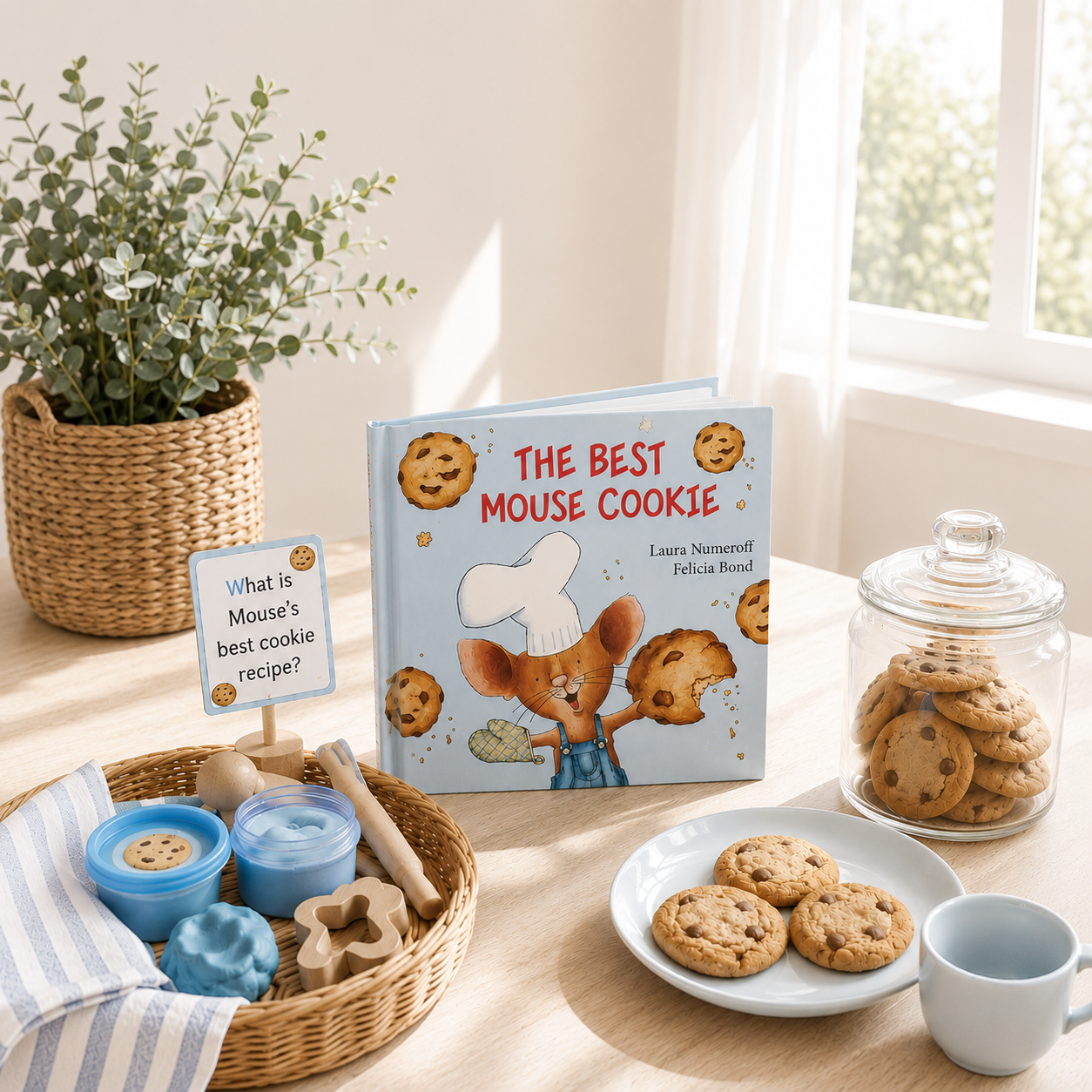
You can extend this story with: cookie baking activities, sequencing cards, dramatic play, class-made circular stories, and writing prompts.

If You Give a Pig a Pancake
A lively story in which a pig’s request for pancakes quickly turns into a whirlwind of playful adventures. Children love predicting what will happen next throughout the story.
Great for: Cooking themes, sequencing, prediction, farm themes, humor
You can extend this story with: pancake-making activities, dramatic play kitchens, farm sensory bins, recipe writing, and sequencing games.

If You Give a Moose a Muffin
A humorous and fast-paced story about a moose whose muffin snack leads to decorating, puppet-making, and more silly adventures. The repetitive structure keeps children actively engaged.
Great for: Cause and effect, woodland animals, sequencing, storytelling, imagination
You can extend this story with: muffin baking, moose crafts, puppet-making, dramatic storytelling, and sequencing activities.

If You Take a Mouse to School
A fun school-themed story about a mouse whose day at school becomes one big adventure. This engaging read-aloud supports conversations about classroom routines and school experiences.
Great for: School themes, routines, sequencing, classroom expectations, transitions
You can extend this story with: pretend classrooms, school supply sorting, dramatic play, routine charts, and class story-writing activities.

If You Give a Cat a Cupcake
A silly and colorful story following a cat through a chain of funny events after receiving a cupcake. Children enjoy the humor, repetition, and playful surprises throughout the story.
Great for: Baking themes, sequencing, prediction skills, cats, imaginative play
You can extend this story with: cupcake decorating, cat crafts, sensory play, sequencing cards, and dramatic storytelling games.


Sequencing Practice
After reading, ask students to:
- Order events (first, next, then, last)
- Draw or match key moments
- Retell the story using simple sentences
This works well for both ESL learners and native speakers.
Act It Out
Turn the story into a mini role-play:
- Assign characters
- Use simple props (paper food, cups, etc.)
- Let students act out the chain of events
This helps build speaking confidence and comprehension.
Create Your Own Story
Follow the classic pattern:
If you give a ___ a ___…
Students can invent their own characters and create a chain of events.
This is excellent for developing creativity and early writing skills.
Draw and Tell
Ask students to:
- Draw their favorite scene
- Create a new ending
- Illustrate their own version of the story
Then have them explain their drawing. This supports oral language development.
Vocabulary Practice
Choose key words from the story:
- Match words to pictures
- Act them out (TPR style)
- Use them in simple sentences
You can also group vocabulary into categories such as food, actions, or objects.
Cause and Effect Chains
Help students identify the pattern:
“Because the mouse asked for milk, what happened next?”
You can write or draw the chain together as a class.
Hands-On Activities
If possible:
- Do pretend cooking activities
- Try simple real ones, such as decorating cookies,cupcakes, donuts, muffins
These activities add a sensory and memorable element to learning.
Create a warm storytime environment:
- Cushions, rugs, and soft lighting
- A dedicated story corner
- Favorite stuffed animals joining in
These small details can significantly increase student engagement.

Stories by Laura Numeroff are more than just entertaining—they’re powerful teaching tools. With their predictable structure, rich vocabulary, and playful tone, they open the door to meaningful, interactive learning.
Whether you focus on speaking, writing, sequencing, or creativity, these stories adapt beautifully to your teaching style.
So pick your favorite, gather your students, and let the fun (and learning!) begin.



0 Comments:
Post a Comment
Thanks for your comment!