

Christmas is a season filled with stories, traditions, music, and small moments that children remember for years to come. It's an invitation to slow down, gather together, and celebrate kindness, generosity, and the simple joy of being with others.
Through books, art, dramatic play, nature, and meaningful conversations, children can explore the season while building language in ways that feel authentic, playful, and connected.
Whether you're teaching in a classroom, learning at home, or simply looking for gentle seasonal inspiration, these hands-on invitations encourage children to imagine, create, and discover the magic of Christmas through play.
Here are a few simple ideas to bring warmth, creativity, and joyful learning into your Christmas season.
Songs & Rhymes
Christmas songs become part of childhood memories. Their rhythm, repetition, and joyful melodies invite every child to sing, move, and participate while naturally developing language.
After singing together, encourage children to use simple props, act out the lyrics, or create movements for each verse. These playful moments strengthen listening skills, sequencing, oral language, and confidence while filling your learning space with holiday cheer.
Extending the Story
A beautiful Christmas story doesn't have to end when the book closes.
Invite children to revisit the characters by retelling the story, sequencing events, drawing their favorite scenes, or imagining what happens after the final page. These gentle invitations deepen comprehension while encouraging children to become storytellers, illustrators, and thoughtful readers.
Each time they return to a story, they notice something new and create deeper connections with the characters and their own experiences.

Creative Invitations
Christmas offers endless opportunities for open-ended creativity.
Provide pinecones, evergreen branches, cinnamon sticks, bells, ribbons, recycled materials, fabric scraps, or colorful paper and invite children to create ornaments, wreaths, winter scenes, or gifts for someone they love.
Rather than focusing on identical crafts, celebrate the choices children make as they explore colors, textures, shapes, and natural materials.
An Invitation to Explore Christmas
Christmas is more than presents and decorations. It's a season filled with stories, traditions, music, generosity, and moments of wonder.
This thematic unit invites children to explore Christmas through books, dramatic play, open-ended art, literacy, science, sensory experiences, and meaningful conversations. Along the way, they'll strengthen vocabulary, build literacy skills, and create lasting memories through joyful, hands-on learning.
Because the most meaningful learning happens when children have time to imagine, create, and wonder together.

Christmas Storytelling
Some of the best writing begins with a picture that sparks curiosity.
Invite children to look closely at the scene and imagine what happened before, during, and after Santa got stuck in the chimney. What was he trying to do? Who came to help? How did he finally get out?
For younger learners, encourage them to tell the story aloud first. Act it out together, use simple props, or let children take turns adding one sentence at a time. Oral storytelling helps ideas flow naturally before they begin writing.
As children create their own stories, they'll build vocabulary, sequencing skills, creativity, and confidence—discovering that every picture can become a brand-new adventure.

Pretend Play
Transform a small corner into Santa's Workshop, a Christmas bakery, a gift shop, a wrapping station, or a cozy holiday home.
As children wrap presents, prepare pretend holiday treats, decorate a tree, or deliver gifts, they naturally practice vocabulary, solve problems, negotiate roles, and tell stories together.
Pretend play creates authentic opportunities for language while nurturing creativity, collaboration, and confidence.
Creating Something Together
Collaborative projects remind children that every small contribution helps create something beautiful. As each child colors, writes, draws, or shares an idea, they become part of a larger story that celebrates the season and the unique gifts each person brings.
Invite children to reflect on their favorite Christmas traditions, imagine life at the North Pole, describe Santa's workshop, or share what makes this season special to them. Every quilt square becomes a window into their imagination, their memories, and their voice.
When all the pieces come together, the finished quilt becomes more than a holiday display—it becomes a celebration of community, creativity, and connection. Along the way, children naturally strengthen writing, oral language, and self-expression while discovering that everyone's contribution makes the whole picture even more meaningful.

Celebrating Every Story
Christmas books introduce children to unforgettable characters and timeless traditions.
After reading together, invite children to wonder:
"Which character would you like to meet?"
"What gift would you give?"
"How do people celebrate Christmas in different places?"
These gentle conversations encourage empathy, curiosity, and meaningful language while helping children connect stories with their own traditions.

Acts of Kindness
Christmas is a wonderful season to notice the small ways we can care for others.
Invite children to draw or write one kind thing they can do for someone—a smile, a helping hand, a handmade card, or a thoughtful gift.
Sharing these simple acts reminds children that kindness is one of the greatest gifts we can give.
Bringing Songs to Life
Songs become even more meaningful when children can see, touch, and act out the words they're singing. The Twelve Days of Christmas is filled with playful characters and memorable images that naturally invite movement, storytelling, and conversation.
As each verse introduces a new gift, encourage children to hold up the matching picture, act it out, or describe what they notice. They might compare the different animals, count the gifts, predict what comes next, or create their own version of the song with favorite holiday objects.
Through music, movement, and imaginative play, children build vocabulary, listening skills, sequencing, and confidence—all while creating joyful memories they'll want to sing again and again.

A Christmas Invitation Table
Sometimes all children need is an inviting space.
Arrange a few carefully chosen materials on a table—a basket of ornaments, ribbon, bells, pinecones, wooden stars, wrapping paper scraps, and recycled boxes.
Without giving instructions, simply invite children to explore.
They may sort, decorate, build, invent stories, or create gifts. Their ideas often become far more meaningful than any activity we could have planned.
Learning One Step at a Time
Many Christmas traditions happen in a sequence.
Decorating a tree, baking cookies, wrapping presents, or building a gingerbread house all happen one step at a time.
Invite children to explain what happens first, next, and last as they organize picture cards or describe familiar routines.
These conversations strengthen sequencing, oral language, and logical thinking while helping children make sense of everyday experiences.

Meaningful Conversations
Sometimes the richest learning begins with a simple question.
Questions like:
"What makes Christmas special to you?"
"How do you celebrate with your family?"
"What is your favorite Christmas tradition?"
"How can we make someone feel loved?"
encourage children to share experiences, build confidence, and learn from one another.

Christmas Sensory Invitations
Fill a sensory bin with dried oranges, cinnamon sticks, pinecones, jingle bells, wooden stars, ribbons, or shredded green paper.
Invite children to explore freely, sort objects, build small worlds, or simply describe what they notice.
These open-ended experiences nurture curiosity while naturally introducing seasonal vocabulary through touch, smell, and conversation.
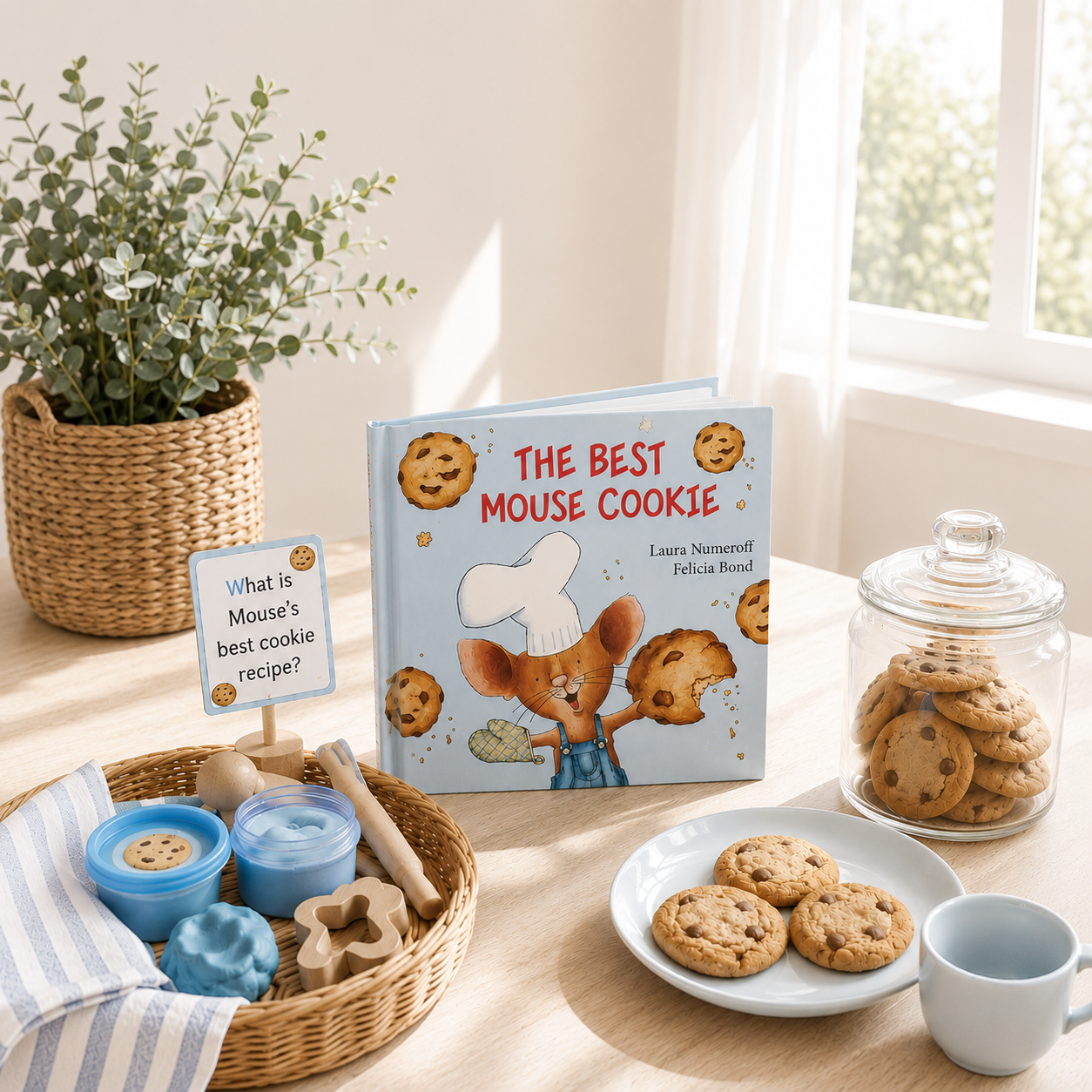
Baking Together
Few Christmas traditions create as much excitement as baking together.
Whether you're making cookies, decorating gingerbread, or preparing a simple holiday snack, invite children to measure, pour, mix, and observe the changes happening along the way.
Cooking offers meaningful opportunities to introduce sequencing, mathematical thinking, descriptive language, and new vocabulary—all while creating lasting memories.
Retelling Through Play
Story puppets invite children to step inside their favorite Christmas books.
As they move the characters, recreate familiar scenes, or invent new adventures, they strengthen sequencing, comprehension, vocabulary, and storytelling while letting their imaginations shine.

An Invitation to Imagine
Offer children a plain Christmas tree, stocking, ornament, or gift outline alongside loose parts, collage materials, buttons, ribbons, pom-poms, fabric, pine needles, or natural treasures.
Without giving examples, simply ask:
"What could this become?"
Every creation tells a different story, reminding children that imagination has no single right answer.
Looking Closely
Christmas pictures are full of tiny details waiting to be discovered.
Invite children to slow down and observe.
"What do you notice first?"
"Can you find something surprising?"
"What do you think is happening?"
These gentle prompts develop observation, descriptive language, and critical thinking while encouraging children to become careful, curious observers.

A Daily Invitation to Wonder
A Christmas countdown creates a simple daily tradition children look forward to.
Reveal one picture each day and invite children to describe it, predict tomorrow's image, tell a story, or connect it with something they've experienced.
These small daily rituals build vocabulary, curiosity, and joyful anticipation throughout December.

A Cozy Christmas Book Basket
Gather a small collection of Christmas books and create a quiet reading corner with pillows, blankets, fairy lights, and a basket of seasonal stories.
There's no need to plan a formal lesson. Simply slowing down to read together creates opportunities for children to ask questions, notice details, predict what might happen next, and make connections with their own family traditions.
Sometimes the most meaningful learning begins with a good story.
Exploring Christmas Traditions
Christmas traditions look different around the world, and every family has its own special way of celebrating.
Invite children to explore holiday foods, decorations, music, clothing, or traditions through pictures, books, and conversations.
Simple prompts like "What do you do with your family?", "Which tradition would you like to try?", or "What smells remind you of Christmas?" encourage meaningful conversations while helping children appreciate different cultures and experiences.

Stories We Can Hold
Children connect with stories in a special way when they can hold the characters in their hands.
Offer simple puppets after reading a Christmas story and invite children to retell familiar events or imagine entirely new adventures.
As they play, ask:
"Where are they going?"
"Who are they visiting?"
"What happens next?"
These playful storytelling experiences nurture sequencing, oral language, imagination, and confidence.

Learning Through Movement
Children learn with their whole bodies.
Place Christmas vocabulary cards around the room and invite children to explore, search, notice, and discover.
As they move, encourage them to describe each picture, say the word aloud, compare objects, or use the vocabulary in conversation.
Movement transforms vocabulary practice into an experience of exploration, curiosity, and joyful learning.
Nature Walk Treasures
Christmas offers wonderful opportunities to bring nature indoors.
Take a short walk and invite children to collect pinecones, evergreen branches, seed pods, holly leaves (where appropriate), or interesting twigs. Back inside, use these treasures to decorate a nature table, create simple ornaments, or inspire seasonal artwork.
As children observe the different textures, scents, and shapes, new vocabulary grows naturally through conversation and discovery.
At the Heart of Christmas
At its heart, Christmas is about more than decorations and gifts. It's about stories shared together, traditions passed from one generation to the next, moments of kindness, and the joy of creating memories with the people we love.
When children are given time to wonder, create, play, and connect, learning becomes something they carry with them long after the holiday season has passed.
I hope these ideas inspire you to slow down, embrace the wonder of Christmas, and fill your learning space with curiosity, creativity, and meaningful moments.
How will you bring the magic of Christmas into your learning this season? 🎄


0 Comments:
Post a Comment
Thanks for your comment!