

For young children, cookies are more than a delicious snack. They inspire curiosity through shapes, colors, textures, smells, recipes, and opportunities for imaginative play. Whether children are pretending to bake, counting chocolate chips, decorating paper cookies, or creating their own cookie shop, cookie-themed activities provide meaningful opportunities for learning through play.
Whether celebrated at home, in a preschool classroom, or as part of a baking or food-themed learning unit, Cookie Day offers exciting opportunities for hands-on exploration, communication, creativity, and joyful discovery.
Why Cookie Day Matters for Little Learners
Young children naturally enjoy helping in the kitchen, pretending to cook, and exploring food-related activities.
Cookie-themed learning helps children:
strengthen fine motor skills
practice counting
explore measurement concepts
develop vocabulary
encourage creativity
engage in pretend play
build social skills
strengthen problem-solving abilities
Simple baking themes often provide rich opportunities for learning across multiple developmental areas.
Creating a Cookie-Themed Learning Environment
Cookie Day is a wonderful opportunity to create a warm and inviting learning space.
You can include:
pretend cookies
cookie cutters
mixing bowls
play dough
rolling pins
recipe cards
baking trays
counting manipulatives
felt cookies
dramatic play bakery props
cookie-themed books
sensory materials
Children are naturally drawn to spaces that encourage creativity, imagination, and hands-on exploration.
Cookie Shop Dramatic Play Ideas
Cookie themes naturally inspire pretend play.
Children can create:
a bakery
a cookie shop
a dessert café
a family kitchen
a cookie decorating station
a cookie factory
a pretend restaurant
a holiday baking center
Through dramatic play, children practice:
communication skills
cooperation
turn-taking
storytelling
problem-solving
social interaction
creative thinking
confidence
Pretend play helps children connect real-world experiences to meaningful learning opportunities.
Language Development Through Cookie Activities
Cookie-themed learning provides endless opportunities for vocabulary development.
Children can describe:
flavors
textures
ingredients
shapes
sizes
colors
smells
recipes
Useful vocabulary words include:
cookie
dough
bake
mix
sweet
crunchy
soft
recipe
ingredients
decorate
sprinkles
oven
measure
chocolate
vanilla
shape
batch
delicious
Because children connect language to sensory experiences and play, vocabulary becomes easier to understand and remember.
Conversation Starters for Cookie Day
Open-ended questions encourage creativity and communication.
Try asking:
What is your favorite kind of cookie?
What ingredients do cookies need?
How would you decorate a special cookie?
What shape would your cookie be?
If you could invent a cookie flavor, what would it taste like?
How do cookies change when they bake?
What makes cookies smell so good?
What would you name your own cookie recipe?
How would you describe a cookie to someone who has never tasted one?
What kind of cookie would a dinosaur or superhero enjoy?
These conversations support oral language, descriptive vocabulary, and imaginative thinking.
Read-Aloud Books for Cookie Day
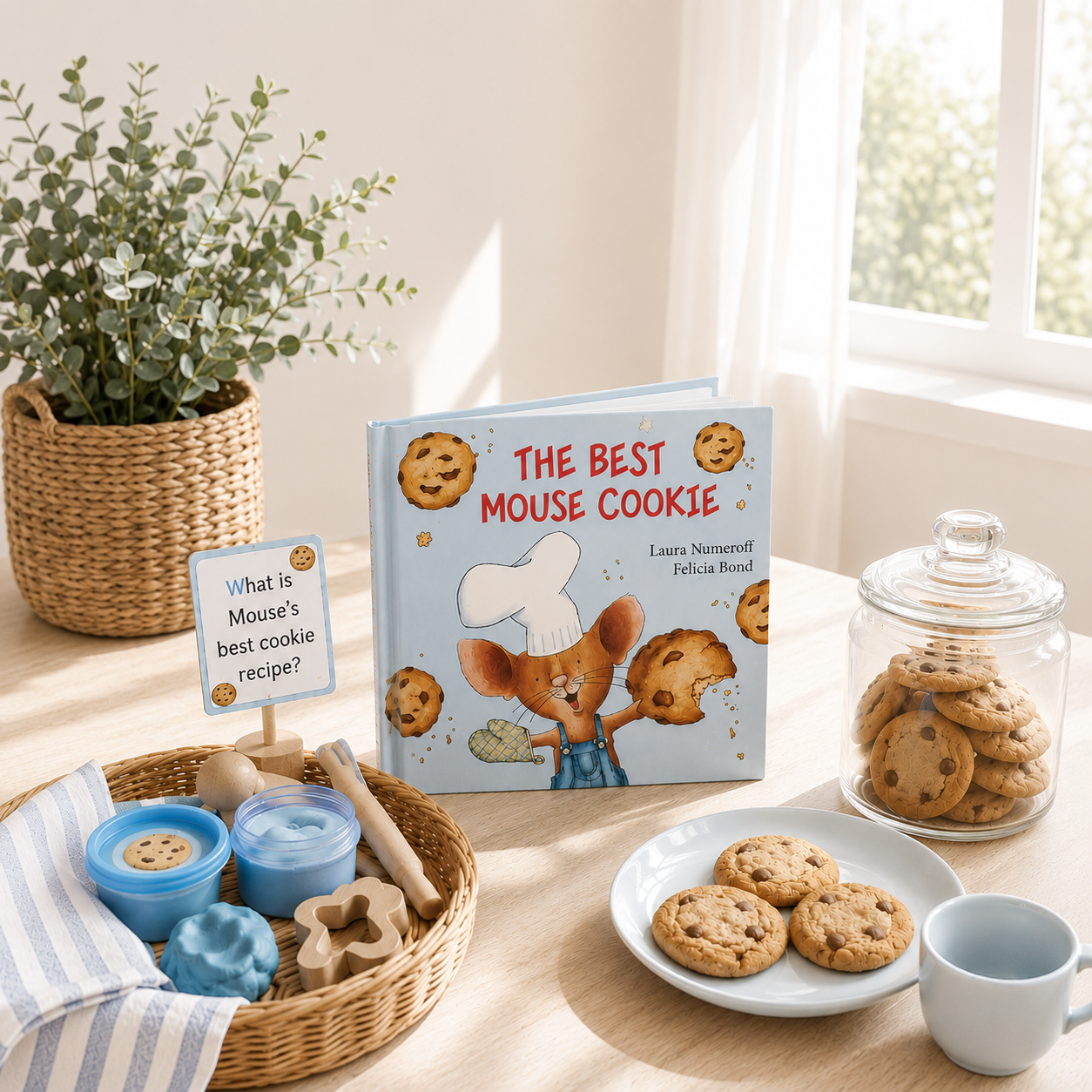
If You Give a Mouse a Cookie by Laura Numeroff
A playful story about cookies, cause and effect, friendship, and the fun of everyday adventures.

The Doorbell Rang by Pat Hutchins
A delightful story about cookies, sharing, counting, and the unexpected joy of having enough for everyone.

The Duckling Gets a Cookie!? by Mo Willems
A funny story about cookies, kindness, sharing, and learning to celebrate someone else’s good fortune.
Mr. Cookie Baker by Monica Wellington
A colorful story celebrating baking, community, creativity, and the delicious journey from ingredients to cookies.
The Smart Cookie by Jory John
An encouraging story about self-confidence, individuality, perseverance, and discovering what makes you special.

Baking Day at Grandma’s by Anika Denise
A cozy story celebrating family traditions, baking together, sensory experiences, and special moments with Grandma.
Sugarbush Spring by Marsha Wilson Chall
A gentle celebration of spring, family traditions, maple sugaring, nature, and the rhythms of seasonal change.
These stories encourage conversations about sharing, kindness, problem-solving, and baking.
Cookie Day Learning Activities
Literacy Activities
Children can:
create pretend recipe books
label baking tools
retell cookie-themed stories
dictate favorite recipes
match pictures and words
practice beginning sounds
create bakery menus
invent cookie names
These activities support vocabulary development, storytelling, and early literacy skills.
Math Activities
Cookies naturally support hands-on math learning.
Children can:
count chocolate chips
sort cookies by shape
create patterns with cookie cutouts
graph favorite cookie flavors
compare cookie sizes
practice one-to-one correspondence
measure ingredients
estimate quantities
Cookie-themed math activities help children connect numbers to meaningful experiences.
Sensory Activities
Children love exploring baking themes through their senses.
Try:
cookie dough play dough
flour sensory trays
scented sensory bins
mixing and pouring activities
texture exploration
spice discovery stations
taste-safe sensory materials
cookie-themed water play
Sensory activities encourage exploration, curiosity, and hands-on learning.
Art Activities
Creative invitations may include:
paper cookie decorating
cookie collages
painted cookie shapes
play dough cookie creations
sprinkle art
bakery signs
cookie-themed murals
shape stamping activities
Art encourages creativity, self-expression, and fine motor development.
Fine Motor Activities
Children can strengthen coordination through:
rolling pretend dough
using cookie cutters
placing small toppings
transferring pom-poms with tweezers
decorating paper cookies
stringing baking-themed beads
cutting cookie shapes
building pretend cookie trays
These playful activities support hand strength and coordination.
Social-Emotional Learning Through Cookie Activities
Cookie Day also supports social-emotional development.
Children can practice:
sharing materials
taking turns
working collaboratively
expressing preferences
making decisions
celebrating creativity
building confidence
using kind language
There is no single "right way" to create a pretend cookie, which encourages self-expression and creative confidence.
Exploring Baking Through Play
Cookie themes help children understand simple real-world processes.
Children can explore:
mixing ingredients
following directions
measuring quantities
observing changes
creating recipes
working together
solving problems
trying new ideas
These experiences help children develop independence and confidence while learning through play.
Cookie Show-and-Tell Ideas
Invite children to share:
favorite cookie recipes
family baking traditions
drawings of special cookies
favorite flavors
holiday baking memories
For children who need support, they can:
point to pictures
share props
use drawings
participate with a partner
These opportunities encourage communication and social connection.
Cookie Day at Home
Families can celebrate through simple and meaningful activities.
Parents and caregivers can:
bake cookies together
decorate cookies
read cookie-themed books
practice measuring ingredients
invent new recipes
create pretend bakeries
talk about family traditions
share favorite treats
These experiences support communication, creativity, and joyful family connection.
Why Children Remember Baking Experiences
Children remember experiences that engage their senses, emotions, and imagination.
Cookie-themed learning helps children feel:
creative
capable
included
curious
confident
connected
successful
engaged
Hands-on activities often create some of the most memorable learning experiences.
Keeping Cookie Day Simple
Cookie Day does not require elaborate recipes or complicated activities.
Its magic often lives in simple moments:
mixing ingredients
pretending to bake
decorating creations
sharing stories
counting chocolate chips
exploring textures
creating recipes
learning together
For little learners, these playful experiences create meaningful opportunities for literacy, math, sensory exploration, creativity, social-emotional growth, and joyful learning.
Cookie Day reminds us that learning can be sweet, hands-on, and filled with opportunities to create, imagine, share, and connect.


0 Comments:
Post a Comment
Thanks for your comment!