

Bring Wonder and Imagination to Your Halloween Lessons
Halloween can be so much more than costumes and candy. It's an invitation to wonder, imagine, create, and tell stories together. Through playful experiences, children naturally build language while exploring pumpkins, friendly monsters, magical creatures, autumn traditions, and not-so-spooky adventures.
Whether you're teaching in a classroom, learning at home, or simply looking for meaningful seasonal ideas, these gentle invitations encourage children to play, create, and discover through hands-on learning.Here are a few simple ways to bring imagination and joyful learning into your Halloween season.
Songs & Rhymes
Songs have a special way of making language memorable. Their rhythm, repetition, and movement invite every child to join in, even those who are still finding confidence with new vocabulary.
After singing together, encourage children to act out the song with simple props, finger puppets, or movement. They might pretend to be pumpkins rolling across the floor, friendly ghosts floating through the room, or little bats flying overhead.
These playful moments strengthen listening skills, vocabulary, sequencing, and confidence—all while creating memories children will want to revisit again and again.
Extending the Story
Halloween stories are filled with characters children love returning to. Instead of closing the book after the last page, invite children to keep the story alive through drawing, sequencing, retelling, or imagining a brand-new ending.
As they revisit favorite characters, children naturally strengthen comprehension, oral language, sequencing, and early writing while discovering that every story can continue in their own unique way.

Creative Invitations
Halloween offers endless opportunities for open-ended creativity.
Provide loose parts, recycled materials, paint, paper, natural treasures, or simple art supplies and invite children to create pumpkins, friendly monsters, spiders, haunted houses, or magical forests.
Rather than focusing on the final product, celebrate the choices children make along the way. Conversations about colors, shapes, textures, and seasonal vocabulary emerge naturally as they create.
An Invitation to Explore Halloween
Halloween is a wonderful season for curiosity.
Children naturally begin asking questions:
"Why do pumpkins glow?"
"Who lives in a haunted house?"
"What would happen if a witch baked cookies?"
This thematic unit invites children to explore Halloween through stories, dramatic play, sensory experiences, science, art, literacy, and meaningful conversations.
Because the richest learning happens when children are free to wonder.

Pretend Play
Transform a small corner into a pumpkin patch, potion lab, haunted bakery, costume shop, or friendly monster café.
As children invent stories, prepare magical recipes, or welcome visitors, they naturally practice vocabulary, solve problems, negotiate roles, and build confidence through imaginative play.
Celebrating Every Story
Halloween is full of unforgettable characters.
After reading together, invite children to wonder:
"Which character would you like to meet?"
"Would you rather be a witch or a ghost?"
"What magical power would you have?"
These gentle conversations encourage imagination, oral language, and storytelling while helping children connect books with their own experiences.

A Little Halloween Magic
Sometimes the simplest invitation sparks the biggest ideas.
Offer children a pumpkin outline, a friendly ghost, or a blank monster shape together with collage materials, leaves, fabric scraps, buttons, feathers, yarn, or natural treasures.
Without giving examples, simply ask:
"Who could this become?"
Every creation tells a different story, reminding children that there is no single right way to imagine.
Learning One Step at a Time
Many Halloween activities naturally happen in sequence.
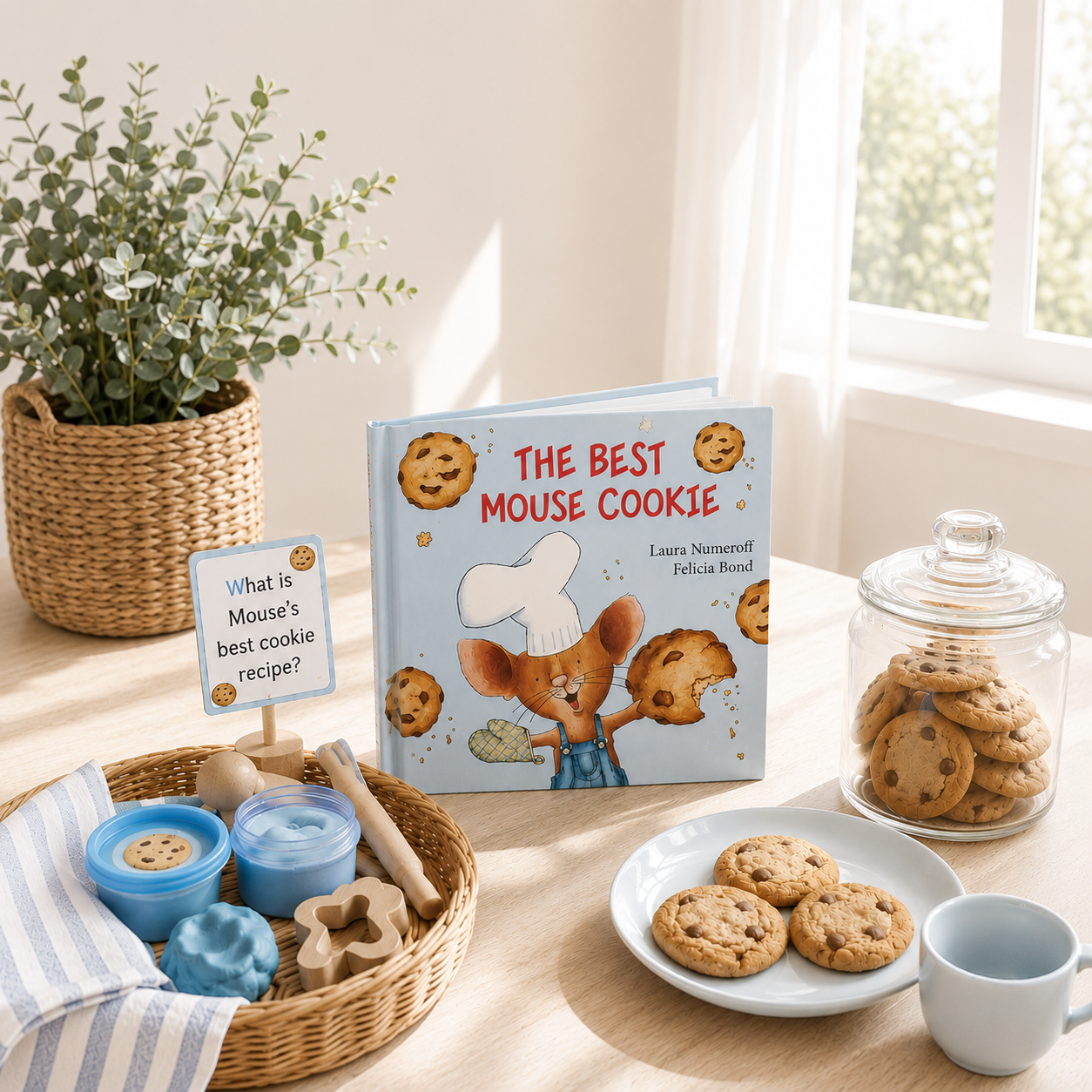
Carving a pumpkin, making monster cookies, mixing a potion, or creating a costume all involve following simple steps.
Invite children to describe what happens first, next, and last, using these familiar phrases as they talk through each process.
These conversations strengthen sequencing, oral language, and logical thinking while helping children organize their ideas.

Meaningful Conversations
Some of the richest learning begins with a simple question.
Open-ended conversation cards encourage children to imagine, predict, and share their ideas.
Questions like:
"What would you keep inside a witch's hat?"
"Would you sleep in a haunted house?"
"If you had a magic broom, where would you fly?"
create opportunities for vocabulary growth, confidence, and meaningful conversations where every child's imagination has room to shine.

Retelling Through Play
Story puppets invite children to step inside their favorite Halloween books.
As they move the characters, recreate familiar scenes, or invent completely new adventures, they strengthen sequencing, comprehension, vocabulary, and storytelling in ways that feel playful and natural.
Every child tells the story a little differently—and that's where the magic happens.
Creating Something Together
Collaborative projects remind children that every small contribution matters. As each child colors, writes, or illustrates their own quilt square, they become part of something much bigger than a single page.
Invite children to share their favorite Halloween traditions, imagine a friendly monster, design a magical potion, or draw something that makes the season feel special. Every square tells a different story, celebrating each child's unique ideas and creativity.
Once the pieces are displayed together, the quilt becomes more than a classroom decoration—it becomes a collection of voices, memories, and imagination. Along the way, children naturally strengthen writing, creativity, and oral language while discovering the joy of creating something together.

Looking Closely
Halloween pictures are full of tiny details waiting to be discovered.
Invite children to slow down and observe.
"What do you notice?"
"Can you find something surprising?"
"Which object doesn't belong?"
These simple prompts encourage careful observation, descriptive language, and critical thinking while celebrating children's natural curiosity.

A Daily Invitation to Wonder
A Halloween countdown becomes a small daily ritual children look forward to.
Reveal one picture each day and invite children to describe it, predict tomorrow's image, tell a story about it, or connect it to something they've experienced before.
These little moments build vocabulary, observation skills, and joyful anticipation throughout the season.

Exploring Halloween Treats
Seasonal foods offer wonderful opportunities for conversation.
Invite children to explore pumpkins, apples, popcorn, candy corn, cookies, or other favorite treats through pictures or real objects.
Talk about colors, textures, shapes, smells, and family traditions.
Simple prompts like:
"Which would you like to taste?"
"What does it smell like?"
"Which treat reminds you of Halloween?"
naturally expand vocabulary while encouraging children to make personal connections.
Stories We Can Hold
Children love bringing stories to life with simple puppets.
After reading a favorite Halloween book, invite them to retell the story, invent a new adventure, or imagine what happens after the last page.
As they play, ask gentle questions like:
"Where are they going?"
"Who are they looking for?"
"What happens next?"
These playful storytelling moments nurture imagination, oral language, sequencing, and confidence.

Learning Through Movement
Children learn with their whole bodies.
Place Halloween vocabulary cards around the room and invite children to explore, search, notice, and discover.
As they move, encourage them to name each picture, describe it, or use it in a sentence.
This simple invitation blends movement, language, and curiosity while making vocabulary feel meaningful, memorable, and joyful.
An Invitation to Keep Wonder Alive
Halloween reminds us that learning doesn't have to be rushed or complicated. A simple story, a handful of leaves, a painted pumpkin, or an imaginary adventure can become the beginning of meaningful conversations and joyful discoveries.
When children are given time to wonder, create, move, and play, language grows naturally alongside curiosity and confidence.
I hope these ideas inspire you to slow down, embrace the magic of the season, and create moments your children will remember long after Halloween has passed.
Wishing you a season filled with stories, imagination, laughter, and little moments of wonder. 🎃🍂


0 Comments:
Post a Comment
Thanks for your comment!