

On the table, a set of picture strips is ready. There are familiar characters, objects, and scenes from a favorite story. Scissors, glue, and a few simple materials are all you need to begin.
Perhaps you're in a cozy home learning corner, a daycare, a library, or a classroom. Wherever you are, the invitation is the same: let's tell the story again, one picture at a time.
Children look closely at the illustrations. They recognize a character, remember a funny moment, and begin to connect the pictures with the words they heard. They cut, arrange, paste, and tell.
And just like that, a familiar story becomes a new opportunity to explore language, sequence events, and build meaning through hands-on play.
Retelling Strips transform a simple paper activity into a story-based learning experience where children can revisit a book, organize their thoughts, and share a story in their own words.

How Retelling Strips Work: Cut, Assemble, and Retell
Retelling Strips are simple, hands-on resources designed to help children revisit a familiar story through pictures and sequencing.
Each activity begins with a collection of illustrations connected to a book. Children cut out the pictures, arrange them in the order of the story, and paste them onto a strip or a designated page.
Once the pictures are in place, the real storytelling begins.
A child might point to the first picture and say, "First, the girl went to the forest." Another might look at the next image and remember, "Then she met the bear!" A third child may use the pictures as prompts to tell the entire story independently.
There is no need to rush. Some children may need help remembering what happened next, while others will enthusiastically narrate every detail.
The pictures provide a visual structure, making it easier for children to organize ideas, recall events, and express themselves through language.
And because the activity includes cutting, arranging, and pasting, it also brings fine motor practice into the storytelling process.
From Storytime to Hands-On Learning
Picture books offer so many opportunities for meaningful learning. A story can introduce new vocabulary, encourage prediction, spark conversations, and invite children to explore characters and events.
Retelling Strips extend that experience beyond the read-aloud.
After sharing a story, you can invite children to revisit the main events through pictures. Instead of simply answering questions about what happened, they actively reconstruct the narrative.
The process naturally encourages several important skills:
Story Sequencing: Children identify what happened first, next, and last.
Reading Comprehension: They recall characters, settings, and important events.
Oral Language: They practice using words and sentences to describe what they see.
Vocabulary Development: Familiar illustrations help children remember and use new words.
Fine Motor Skills: Cutting, positioning, and pasting pictures strengthen hand coordination.
Independence: Children gradually learn to organize and retell a story on their own.
The beauty of this activity is that it connects several areas of learning through one familiar experience: a story children already know and love.
Practical Setup and Organization Tips
A calm, inviting setup can make the activity feel even more enjoyable.
You don't need a complicated arrangement. A small table, a tray with the materials, and a comfortable space to work are often enough.
Here are a few simple ideas to make Retelling Strips easy to prepare and use:
Keep the picture strips, scissors, and glue sticks together in a small tray or basket.
Prepare one set of pictures for each child or invite children to work in pairs.
Read the story aloud before introducing the activity so children have a familiar narrative to revisit.
Offer a simple visual reminder of the sequence: first, next, then, and last.
Allow children to arrange the pictures before gluing them down.
Keep completed strips in a story basket or folder so children can return to them during independent play.
Pair the activity with puppets, story props, or a favorite book to extend the experience.
A little preparation goes a long way. When materials are accessible and thoughtfully arranged, children can focus on the story rather than the instructions.
Scenes and Moments: Quick and Deep
Retelling Strips can fit into different moments of the day, depending on the children's interests, energy, and familiarity with the story.
A quick story review
Imagine a small group gathered after a read-aloud. The children have just finished a favorite picture book.
You place three or four pictures on the table.
"What happened first?"
A child points to the first scene. Another remembers what came next. Together, they arrange the pictures and tell the story again.
In just a few minutes, the group has revisited the narrative, practiced sequencing, and shared their ideas.
A deeper storytelling experience
Later, a child chooses a familiar story from the book basket and brings out the matching Retelling Strips.
This time, there is no rush.
The child carefully cuts out the pictures, studies each scene, and begins arranging them. Some images are moved around before finding their place.
"Wait! This happened before that!"
Once the pictures are assembled, the child begins to retell the story, adding details, character voices, and perhaps even a new ending.
The activity has become a longer exploration of memory, language, and imagination.
Both experiences are valuable. One offers a brief opportunity to revisit a story, while the other invites children to spend more time exploring its structure and meaning.

The Collection: Stories to Revisit Again and Again
Retelling Strips can accompany many different types of picture books, from familiar classics to seasonal favorites.
Each story brings its own characters, events, and opportunities for conversation.
You might explore:
Traditional Tales: Revisit familiar stories such as The Gingerbread Man, The Three Little Pigs, or Goldilocks and the Three Bears.
Predictable Stories: Use books with repeating patterns to encourage children to anticipate what happens next.
Character-Based Stories: Focus on the actions and experiences of a central character.
Seasonal Stories: Revisit autumn, winter, spring, or summer picture books through simple visual sequences.
Stories with a Clear Beginning, Middle, and End: Help children recognize how events connect and build a narrative.
The possibilities are endless. A favorite book can become the starting point for a new hands-on activity, a conversation, or an independent storytelling moment.
And once children become familiar with the process, they may begin to ask for the strips that accompany their favorite stories.
Play Anywhere: Flexible Spaces for Storytelling
One of the lovely things about Retelling Strips is how easily they adapt to different learning environments.
At home, a small table or a cozy corner near the bookshelf can become a storytelling space.
In a daycare, the strips can be part of a quiet invitation to explore a familiar book.
In a library, they can extend a storytime session and encourage children to revisit a narrative after the group reading.
For teachers, they can become part of a literacy center, a small-group activity, or a simple follow-up to a shared read-aloud.
You can also adapt the experience to different levels of support.
Younger children might work with just two or three pictures, while older children can sequence more events and retell the story with greater detail.
Some children may need an adult to guide the process, while others will enjoy working independently.
The goal is not to complete the strip as quickly as possible. It is to create space for children to revisit a story in a way that feels meaningful to them.
Transforming Story Retelling into Meaningful Learning
A simple collection of pictures can open the door to so many conversations.
As children work, you might hear questions such as:
"What happened after that?"
"Where did the character go?"
"Why do you think she did that?"
"What would happen if we changed the ending?"
These small exchanges encourage children to think beyond the pictures and explore the relationships between events.
Retelling Strips can support:
Comprehension: Children recall and organize important story events.
Communication: They share ideas, describe pictures, and practice narrative language.
Critical Thinking: They consider the order of events and make connections.
Creativity: They add details, use character voices, or imagine alternative endings.
Confidence: Familiar stories provide a comfortable starting point for independent expression.
And perhaps one of the most meaningful moments comes when a child begins to tell the story without looking at the book.
The pictures become a bridge between remembering and communicating.
A Feeling of Completion: From Pictures to Stories
The scissors are put away. The pictures are arranged, the glue has dried, and the story is ready to be told once more.
A child picks up the finished strip and begins.
"First..."
A pause.
"Then..."
And the story unfolds again.
What began as a simple cut-and-paste activity has become an opportunity to revisit a favorite book, practice language, and build a deeper connection with the story.
Retelling Strips remind us that storytelling doesn't end when the book closes. It can continue through pictures, hands-on exploration, conversation, and play.
And here's where the possibilities grow even further.
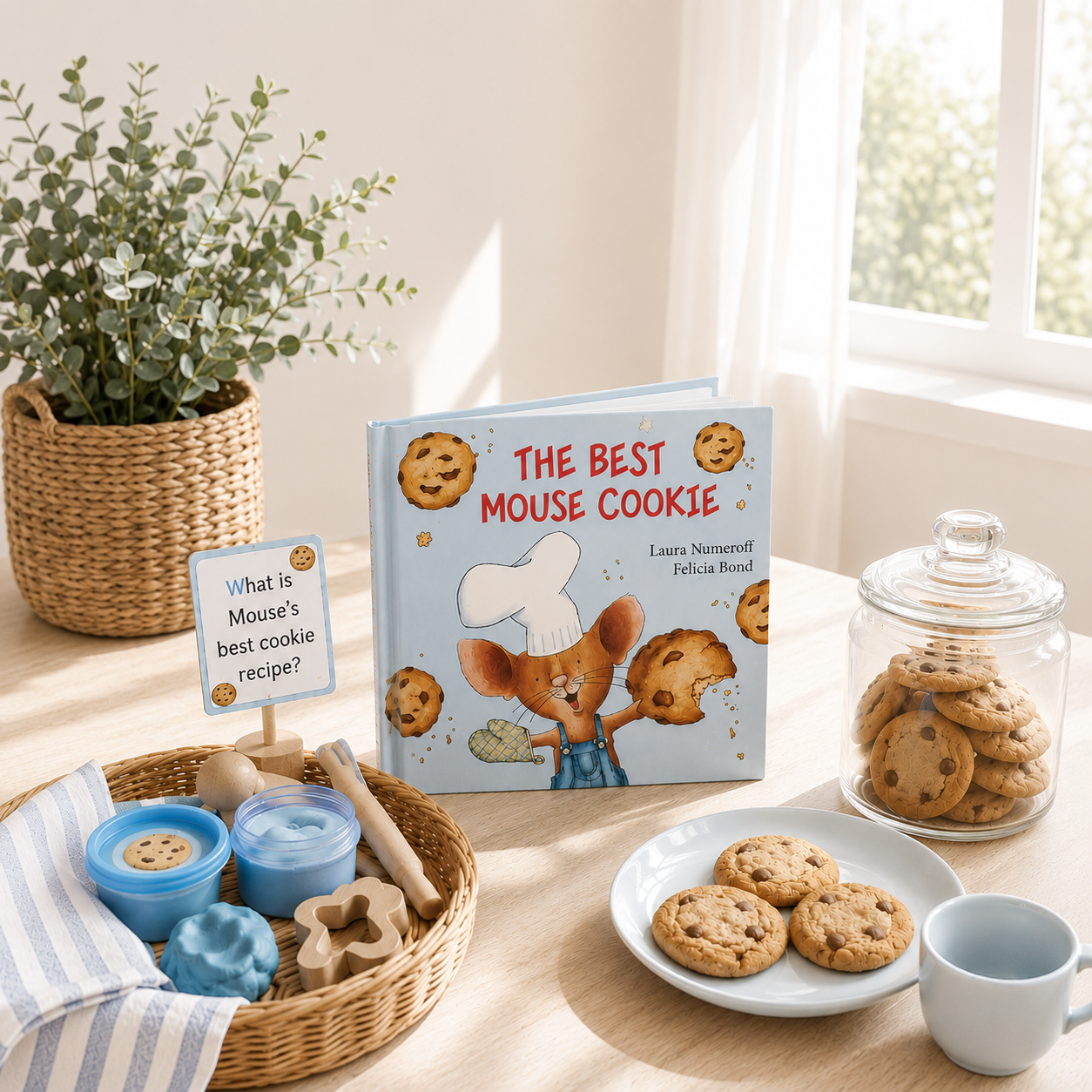
Pair Retelling Strips with Book Companions, puppets, story props, sequencing cards, or Play-Doh Mats to create a gentle rhythm of story-based learning.
One familiar book can inspire a retelling activity today, a puppet performance tomorrow, and a new imaginative adventure the following week.
Because sometimes, the best way to understand a story is to return to it, piece by piece, and tell it again.
And just like that, a familiar story becomes a new invitation to explore, remember, and imagine.



0 Comments:
Post a Comment
Thanks for your comment!