

National Sugar Cookie Day is celebrated every year on July 9.Sugar Cookie Day is more than baking.
It is a joyful invitation for children to explore creativity, sensory play, early math, fine motor skills, imagination, and connection through one of childhood’s sweetest experiences.
For little learners, sugar cookies become:
• a sensory experience
• a creative canvas
• a hands-on math activity
• a storytelling opportunity
• a fine motor challenge
• a celebration of imagination and joy
In early childhood education, some of the richest learning happens through meaningful, playful experiences children can touch, smell, decorate, taste, and create themselves.
And few activities combine all those elements quite like cookie decorating.
Sugar cookies do not need to be perfect.
Crooked frosting.
Too many sprinkles.
Messy icing.
Tiny fingerprints everywhere.
That is where the magic lives.
Why Sugar Cookie Day Matters for Little Learners
Young children learn best when experiences feel joyful, hands-on, and meaningful.
Decorating sugar cookies encourages children to:
• create freely
• strengthen fine motor skills
• explore textures and colors
• practice patience
• build confidence
• experiment creatively
• engage their senses
• express individuality
• connect through shared experiences
Unlike crafts with one expected result, cookie decorating is open-ended.
Children decide:
• which colors to use
• how much frosting to spread
• where the sprinkles belong
• what patterns to create
• what their cookie becomes
This type of child-led exploration supports:
• creativity
• independence
• sensory development
• language growth
• problem-solving
• emotional expression
• confidence-building
• imaginative thinking
Most importantly, it reminds children that learning can feel playful, cozy, delicious, and full of celebration.
Creating a Sugar Cookie Learning Environment
Sugar Cookie Day does not require perfection.
A simple setup can include:
• sugar cookie dough
• cookie cutters
• rolling pins
• frosting
• sprinkles
• bowls and spoons
• silicone mats
• paper plates
• child-safe spatulas
• colored icing
• napkins
• edible decorations
The goal is not flawless cookies.
The goal is exploration, creativity, and joyful participation.
When children are invited to create without pressure, they often become:
• calmer
• more focused
• more expressive
• more engaged
• more confident
Beginning With the Senses
Cookie decorating naturally invites sensory exploration.
Before directing children, encourage them to observe and notice.
Ask questions like:
• How does the dough feel?
• Is it soft or firm?
• What happens when you roll it?
• What colors do you notice?
• How does the frosting smell?
• What sounds do sprinkles make?
• What happens when colors mix together?
• How does the icing change as it dries?
These conversations support:
• sensory awareness
• descriptive language
• observation skills
• curiosity
• scientific thinking
• emotional expression
Children build vocabulary best when language comes from real experiences.
Language Development Through Cookie Decorating
Sugar Cookie Day creates rich opportunities for conversation and storytelling.
Children naturally begin describing:
• colors
• textures
• shapes
• flavors
• decorations
• emotions
• creations
Useful sugar-cookie vocabulary includes:
• sweet
• sprinkle
• frosting
• soft
• crunchy
• sticky
• smooth
• colorful
• sugary
• delicious
Because children are physically engaged in the process, language becomes meaningful and memorable.
Conversation Starters for Sugar Cookie Day
Open-ended questions help encourage creativity and communication.
Try asking:
• What does your cookie remind you of?
• Which decorations did you choose?
• How does the frosting feel?
• What happens when colors mix together?
• What shape should we make next?
• If your cookie had a name, what would it be?
• What would a giant cookie world look like?
• Which sprinkle color is your favorite?
• What smells do you notice while baking?
• How did you feel while decorating today?
These conversations support:
• expressive language
• storytelling
• imagination
• emotional awareness
• critical thinking
• social interaction
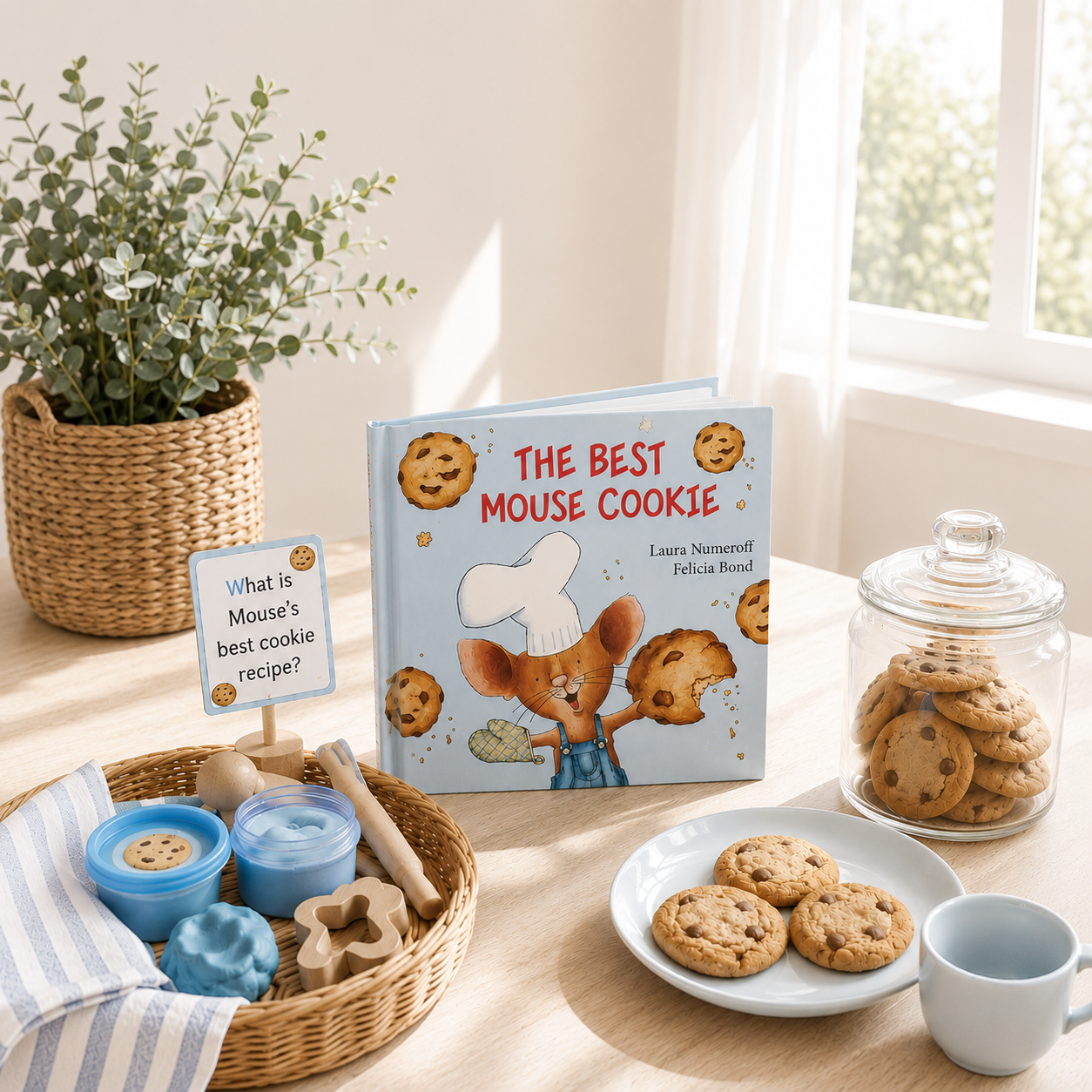
Read-Aloud Books for Sugar Cookie Day
Read-alouds help children connect baking experiences to stories, imagination, and family traditions.
Favorite Cookie & Baking Read-Alouds:
A classic favorite full of humor, sequencing, and imagination.
Wonderful for sharing, counting, and early math concepts.
A cozy seasonal story celebrating sweetness and tradition.
Funny and playful with themes of creativity and self-expression.
Perfect for family connection and baking memories.
A humorous story about problem-solving and cooperation.
Open-Ended Sugar Cookie Play Ideas
Sugar cookies can become almost anything.
Children may create:
• animals
• stars
• flowers
• hearts
• faces
• imaginary creatures
• rainbow cookies
• holiday shapes
• story characters
• “monster cookies”
• tiny cookie towns
There is no right outcome.
The value lives in:
• experimentation
• imagination
• process
• creativity
• joyful exploration
Sugar Cookie Learning Activities
Literacy Activities
• Dictate cookie recipes
• Create “My Favorite Cookie” books
• Label baking tools
• Draw cookie designs
• Retell baking experiences
• Practice letter formation in flour trays
• Create bakery pretend-play signs
These activities support:
• vocabulary development
• storytelling
• oral language
• print awareness
• early writing skills
Math Activities
• Count sprinkles
• Sort decorations by color
• Compare cookie sizes
• Measure ingredients
• Explore patterns with frosting
• Count cookie cutters
• Practice one-to-one correspondence
Hands-on baking naturally introduces meaningful math concepts.
Sensory Activities
• Dough squishing
• Sprinkle sensory bins
• Frosting texture exploration
• Scent matching with vanilla or cinnamon
• Rolling and flattening dough
• Mixing ingredients
Sensory play supports emotional regulation while strengthening curiosity and body awareness.
Fine Motor Activities
• Squeezing icing bags
• Sprinkling toppings
• Rolling dough
• Pressing cookie cutters
• Spreading frosting with spatulas
• Picking up decorations with fingers or tweezers
These activities strengthen hand muscles and coordination needed for writing and self-help skills.
Sugar Cookie Art Activities
Cookies become both art and expression.
Children can:
• create frosting patterns
• explore color mixing
• make sprinkle mosaics
• design themed cookies
• create rainbow cookies
• invent silly cookie faces
The process matters more than the final product.
Creativity grows when children feel free to experiment.
Dramatic Play Bakery Ideas
Transform the classroom into a pretend bakery.
Include:
• aprons
• trays
• menus
• cookie boxes
• rolling pins
• pretend money
• order forms
• bakery signs
Children naturally begin:
• role-playing
• storytelling
• cooperating
• negotiating
• problem-solving
• using new vocabulary
Pretend play supports social-emotional learning in meaningful ways.
Social-Emotional Learning Through Baking
Cookie decorating encourages children to:
• practice patience
• tolerate mistakes
• share materials
• make choices
• express creativity
• build confidence
• celebrate individuality
Many children also experience:
• joy
• calmness
• connection
• pride
• emotional comfort
Sweet sensory experiences often feel grounding and emotionally supportive for little learners.
Keeping Sugar Cookie Day Simple
Sugar Cookie Day does not need perfection.
It simply asks for:
• time together
• opportunities to create
• permission to explore
• moments of joy
• space for imagination
A little dough.
A handful of sprinkles.
Tiny hands covered in frosting.
For young children, these simple moments become meaningful learning experiences filled with creativity, confidence, language, sensory discovery, and connection.


0 Comments:
Post a Comment
Thanks for your comment!