
 |
How to Create a Literature-Based Homeschool Day
One of the greatest advantages of homeschooling is the freedom to move beyond traditional subject-by-subject instruction and create meaningful learning experiences that feel connected, engaging, and enjoyable.
A literature-based homeschool day does exactly that.
Instead of teaching reading, science, writing, art, and social studies as separate subjects, a quality children's book becomes the starting point for learning across multiple areas.
Stories provide context, spark curiosity, encourage discussion, and create natural opportunities for exploration.
The result is a homeschool day that feels less like checking off assignments and more like discovering, creating, and learning together.
If you're new to literature-based homeschooling, here's a simple framework for creating a day of learning centered around a favorite book.
What Is a Literature-Based Homeschool Day?
A literature-based homeschool day uses a story as the foundation for learning.
Rather than beginning with worksheets or isolated lessons, children start with a meaningful read-aloud.
The story then inspires activities, discussions, projects, and learning opportunities throughout the day.
For example, after reading The Very Hungry Caterpillar, children might explore:
Butterfly life cycles
Counting and sequencing
Healthy foods
Art projects
Vocabulary development
Story retelling
One book becomes the thread that connects the day's learning.
Step 1: Choose a High-Quality Picture Book
The first step is selecting a book that offers opportunities for discussion and extension.
Look for stories that include:
Rich vocabulary
Interesting themes
Memorable characters
Strong illustrations
Connections to science, nature, history, or everyday life
Popular literature-based homeschool books often include:
The Very Hungry Caterpillar
Bear Says Thanks
Chrysanthemum
The Gruffalo
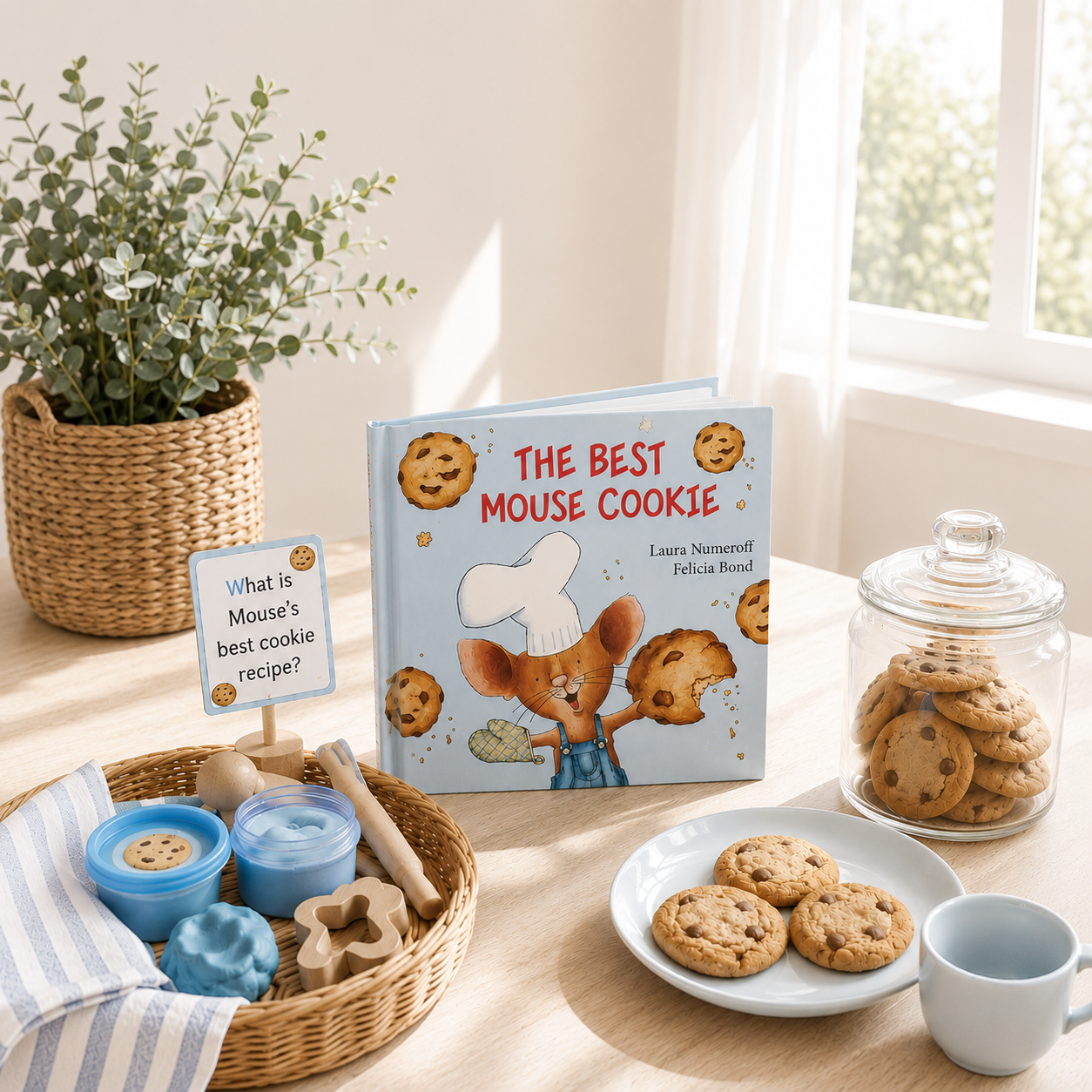
If You Give a Mouse a Cookie
Dragons Love Tacos
The best book is often one that sparks your child's curiosity.
Step 2: Start with a Read-Aloud
Read the story together without rushing.
Allow children to enjoy the illustrations, ask questions, and engage naturally with the text.
During the read-aloud, you might:
Pause to discuss vocabulary
Ask prediction questions
Notice details in the illustrations
Connect the story to prior experiences
The goal is enjoyment and comprehension, not testing.
Stories should remain a positive experience.
Step 3: Talk About the Story
Discussion is one of the most valuable parts of literature-based learning.
After reading, spend time talking about the book.
Questions might include:
What happened first?
Who was your favorite character?
What problem did the character face?
How was the problem solved?
What would you have done differently?
What lesson can we learn from this story?
These conversations help children develop comprehension, critical thinking, and communication skills.
Step 4: Extend Learning Through Literacy Activities
Stories naturally support literacy development.
Simple activities might include:
For Younger Learners
Sequencing cards
Character matching
Story retelling
Drawing favorite scenes
For Older Learners
Story summaries
Character analysis
Creative writing
Journal responses
Literacy activities help children revisit and deepen their understanding of the story.
Step 5: Connect the Story to Other Subjects
This is where literature-based homeschooling becomes especially powerful.
A single book can inspire learning across multiple subjects.
Science
Books often introduce opportunities to explore:
Animals
Plants
Weather
Habitats
Life cycles
Math
Stories can support:
Counting
Patterns
Sorting
Graphing
Measurement
Social Studies
Books may inspire discussions about:
Communities
Cultures
Geography
Traditions
Art
Children can:
Create crafts
Paint scenes
Design characters
Build story-inspired projects
Integrated learning helps children see connections between subjects.
Step 6: Include Hands-On Exploration
Children learn through doing.
Hands-on activities help bring stories to life.
Depending on the book, you might:
Go on a nature walk
Plant seeds
Bake a recipe
Build a model
Create a sensory bin
Act out the story
Use puppets for retelling
These experiences make learning memorable and meaningful.
Step 7: Follow Your Child's Interests
One of the greatest strengths of homeschooling is flexibility.
Sometimes a story sparks unexpected interests.
Perhaps a child becomes fascinated by butterflies, bears, flowers, or transportation.
Allow room to explore those interests.
The goal is not to complete every possible activity.
The goal is to nurture curiosity.
Some of the best homeschool learning happens when children lead the way.
A Sample Literature-Based Homeschool Day
Morning Read-Aloud
Read Bear Says Thanks together.
Discussion
Talk about gratitude, friendship, and kindness.
Literacy
Retell the story using picture cards.
Science
Explore animals preparing for seasonal changes.
Art
Create a gratitude tree using paper leaves.
Writing
Write or draw something you are thankful for.
Nature Study
Take a walk and collect leaves or natural treasures.
Family Reflection
Share favorite moments from the day.
One story creates an entire day of connected learning.
Why Literature-Based Homeschooling Works
Stories engage children emotionally.
They provide context for learning and create natural opportunities for exploration.
Rather than memorizing isolated facts, children connect learning to meaningful experiences.
Literature-based homeschooling supports:
Reading comprehension
Vocabulary development
Critical thinking
Creativity
Communication skills
Curiosity
Family connection
Most importantly, it helps children develop a positive relationship with learning.
Final Thoughts
Creating a literature-based homeschool day does not require complicated lesson plans or expensive materials.
All you need is a great story, a willingness to explore, and the flexibility to follow your child's interests.
When stories become the heart of learning, children discover that reading is more than a school subject.
It becomes a doorway to science, art, writing, conversation, discovery, and imagination.
One book can inspire an entire day of meaningful learning.
And often, those are the lessons children remember most.
At A Teachable Year Through Stories, we believe that learning should be meaningful, engaging, and connected to real experiences. Through story-based learning, children build knowledge, confidence, curiosity, and a lifelong love of learning—one story at a time.


0 Comments:
Post a Comment
Thanks for your comment!