

There is something magical that happens when children read more than one book by the same author.
At first, they simply enjoy the stories.
Then they begin to notice familiar characters, repeated themes, favorite illustration styles, and little details that connect one book to another.
Without even realizing it, they start thinking like readers.
This is the beauty of an Author Study.
Whether you teach in a classroom, homeschool your children, work in a library, or simply love sharing stories, exploring one author at a time creates meaningful learning experiences that go far beyond reading a single book.
Instead of rushing from one story to the next, children have the opportunity to slow down, make connections, ask questions, and truly appreciate the work of an author and illustrator.
And perhaps most importantly—they begin to see books as treasures waiting to be explored.

What Is an Author Study?
An Author Study is a collection of learning experiences centered around the books of one children's author or illustrator.
Instead of reading unrelated books each day, children spend time discovering the unique style, themes, characters, and creative voice of a single author.
As they read multiple stories, they naturally begin to notice:
- favorite characters
- recurring themes
- illustration styles
- repeated vocabulary
- writing patterns
- humor and storytelling techniques
- connections between books
These discoveries happen naturally through conversation, play, art, and repeated readings.
Children become detectives, noticing details they may have missed if they had only read one book.
Why Author Studies Matter
Children love familiarity.
When they recognize an author's style, reading becomes more comfortable and more enjoyable.
Each new story feels both exciting and familiar at the same time.
Author studies also encourage deeper thinking.
Instead of asking:
"What happened in this story?"
Children begin asking:
"This reminds me of another book..."
"Why do all of his characters seem so kind?"
"She always writes about animals."
"His illustrations look different from other books."
These are the beginnings of literary thinking.

Skills Children Develop Through Author Studies
One of the wonderful things about Author Studies is that they naturally support learning across many different areas.
Children build:
- language development
- vocabulary
- comprehension
- sequencing
- prediction skills
- oral language
- critical thinking
- observation
- creativity
- visual literacy
- storytelling
- confidence as readers
Because they become familiar with the author's style, they often participate more during read-alouds and feel comfortable making predictions and sharing ideas.
Author Studies Work Beautifully with Play
Books are never meant to stay on the bookshelf.
One story naturally leads to invitations for play.
After reading several books by the same author, children can explore ideas through:
- storytelling baskets
- puppets
- loose parts
- dramatic play
- sensory bins
- art invitations
- nature exploration
- small world play
- cooking activities
- science investigations
- writing invitations
These experiences help children revisit stories in meaningful, hands-on ways.
Play becomes another language for understanding literature.
Creating a Cozy Author Study
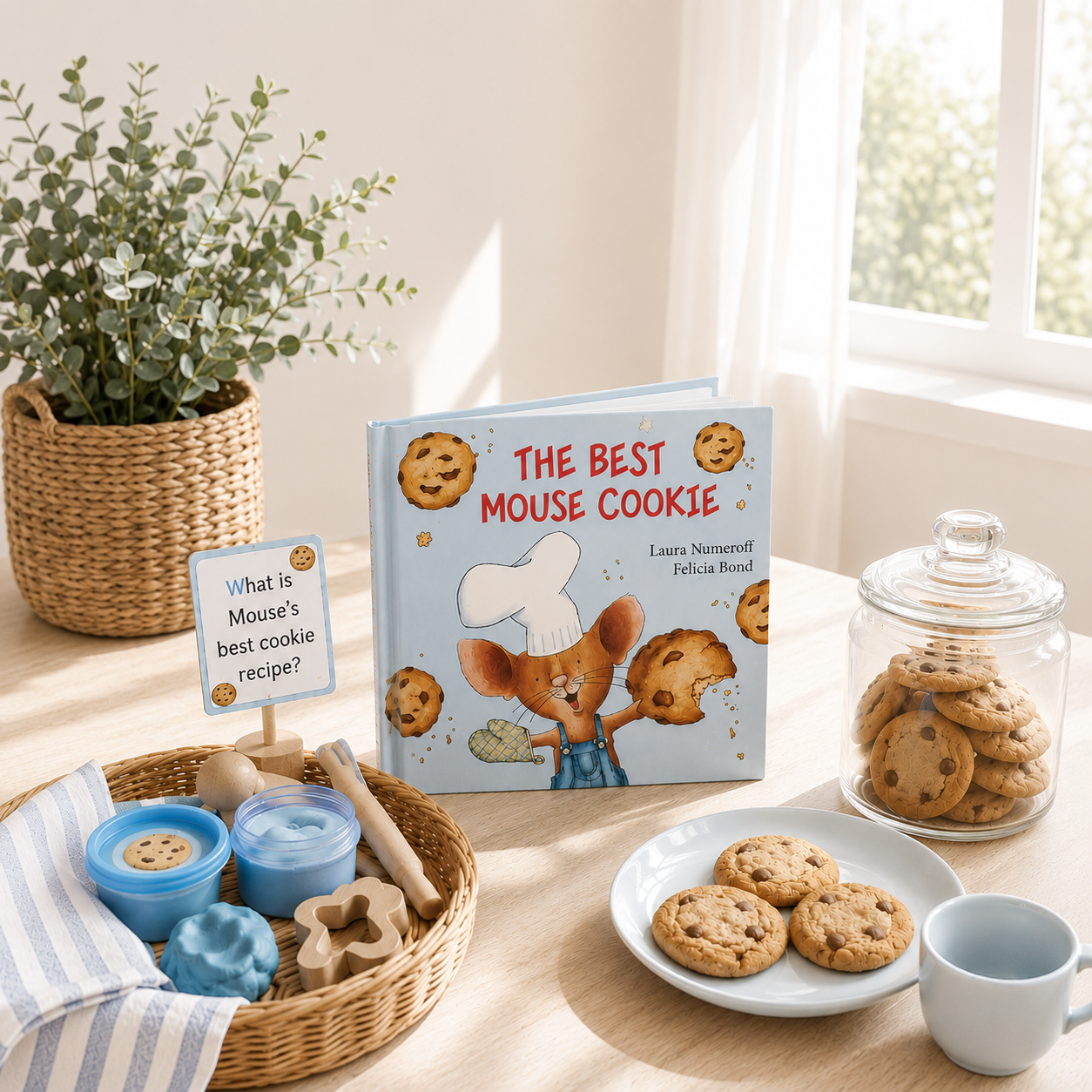
One of my favorite ways to introduce an author is by creating a small invitation.
Gather several books by the author in a beautiful basket.
Add a few natural materials, soft lighting, seasonal objects, or simple props inspired by the stories.
There is no need for elaborate decorations.
A thoughtfully prepared space invites children to slow down, browse, wonder, and choose books independently.
Sometimes the environment tells children:
"These stories are worth spending time with."
Questions to Explore During an Author Study
Rather than testing comprehension, invite curiosity.
You might ask:
- What do you notice about these books?
- Which story is your favorite? Why?
- Do you see anything that appears in more than one book?
- How are the illustrations similar?
- Which character reminds you of another story?
- What surprises you?
- What do you think this author loves writing about?
There are no right or wrong answers.
The goal is simply to notice, wonder, and think together.
Extending Learning Beyond the Story
After reading several books together, children can create their own projects inspired by the author.
Ideas include:
- creating a timeline of the author's life
- comparing favorite books
- designing a new book cover
- making puppets
- writing a book inspired by the author's style
- illustrating a favorite scene
- painting using similar techniques
- acting out favorite stories
- building story settings with loose parts
- creating a classroom gallery
These projects celebrate creativity rather than focusing on right answers.
Wonderful Authors to Explore with Young Children
There are so many incredible children's authors to discover.
Some wonderful places to begin include:
- Eric Carle
- Dr. Seuss
- Kevin Henkes
- Jan Brett
- Lois Ehlert
- Sandra Boynton
- Laura Numeroff
- Maurice Sendak
- Mo Willems
- Lucille Colandro
- Karma Wilson
- Doreen Cronin
- E.B. White
- Peter H. Reynolds
- Pat Hutchins
- Ezra Jack Keats
- Audrey Wood
- Jan Fearnely
- Beatrix Potter
- Adam Rubin
- Sue Hendra
- Tomie dePaola
- Alice Hemming
- Julia Donaldson
- Bill Martin Jr.
- C.S. Lewis
- Ryan T Higgins
- Jory John
- Tad Hills
- Laura Ingalls
- Leo Lionni
- Aaron Reynolds
- Drew Daywalt
- Nicholas Allan
- Roal Dahl
- Mem Fox
Each author brings a unique voice and opens the door to different themes, artistic styles, and learning opportunities.
Our Author Study Printables
To make planning easier, I've created printable Author Study resources that can be used with almost any children's author.
These open-ended pages encourage observation, conversation, drawing, and meaningful responses to literature.
You'll find activities such as:
- Meet the Author
- About the Author
- Author Portrait
- Timeline
- Favorite Books
- Story Connections
- My Favorite Character
- Book Comparison
- Writing Like the Author
- Reflection Pages
They're designed to work beautifully in classrooms, homeschool settings, libraries, literacy centers, and book clubs.

Books Build Readers—Authors Build Lifelong Book Lovers
Reading one wonderful book is a gift.
Reading many books by the same author creates something even more powerful.
Children begin to recognize patterns, appreciate different artistic voices, and understand that every author has something unique to share.
They learn that books are connected.
Ideas are connected.
Stories are connected.
And slowly, almost without noticing, they begin building a lifelong relationship with literature.
So choose an author.
Read slowly.
Wonder together.
Read another.
Then another.
You may be surprised by how much children discover—not only about books, but about themselves as readers.


0 Comments:
Post a Comment
Thanks for your comment!